Author: rhondamusch-com

  • How Much Down Payment Do You Need To Buy a House?

    How Much Down Payment Do You Need To Buy a House?

    Down payments on home loans vary from 0% to 20%+, depending on loan type, property, and buyer finances. Conventional loans may require as little as 3%, FHA 3.5%, and VA/USDA loans allow 0% down for eligible buyers. A 20% down payment avoids private mortgage insurance (PMI), which protects lenders and costs 0.5%-1.5% annually. Closing costs, separate from down payments, typically run 2%-5% of the loan. Down payment assistance programs are widely available to help buyers.

    Continue to full article

  • Homebuyers Gain More Choices and Bargaining Power for Fall 2026

    Homebuyers Gain More Choices and Bargaining Power for Fall 2026

    In fall 2026, homebuyers gain negotiating power due to 4.9 months' housing supply, low sales, and ~7% mortgage rates. Sellers are more open to concessions like price reductions, credits, repairs, and flexible timelines, especially on older or less desirable homes. Buyers should negotiate respectfully, focusing on realistic requests tied to evidence. Sellers benefit from pricing competitively and pre-inspecting. Polite, specific offers grounded in payment math work best.

    Continue to full article

  • What Is Real Property? Definition and Types of Properties

    What Is Real Property? Definition and Types of Properties

    Real property includes land, permanent structures, and ownership rights like selling, leasing, or profiting from the property, such as mineral or water rights. It differs from real estate, which is tangible land and structures without ownership rights. Real property rights can be freehold (lifetime or indefinite ownership), nonfreehold (leasehold), or concurrent (shared ownership). Rights include use, control, leasing, privacy, sale, inheritance, and mortgage collateral.

    Continue to full article

  • How mortgage preapproval works and why it matters before buying a home

    How mortgage preapproval works and why it matters before buying a home

    Mortgage preapproval is a lender's letter stating you qualify to borrow a certain amount for a home, based on a detailed review of your credit, income, debt, and assets. It helps establish a realistic budget, strengthens offers, and speeds up the buying process. Preapproval requires documentation and a hard credit check, lasts 30-60 days, and is not a guarantee of final approval. Avoid major financial changes after preapproval to maintain eligibility.

    Continue to full article

  • The Roof Is 20 Years Old at Retirement — Should You Replace It Before You Stop Working?

    The Roof Is 20 Years Old at Retirement — Should You Replace It Before You Stop Working?

    A 20-year-old roof isn't automatically due for replacement; its condition, insurance coverage, and future plans matter. Roof age alone doesn't determine necessity—inspection is key. Insurance may limit coverage on older roofs, and normal wear isn't covered. Replacing before retirement can ease cash flow, but funding methods impact finances. Keep records for tax basis. If selling soon, consider market impact. Plan based on inspection, insurance, estimates, and retirement timeline.

    Continue to full article

  • Is Paying Off Your Mortgage With a Home Equity Loan a Wise Move?

    Is Paying Off Your Mortgage With a Home Equity Loan a Wise Move?

    A home equity loan provides a lump sum based on home equity, while a HELOC offers a revolving credit line. Both can be used to pay off a mortgage but involve interest and risk of losing the home if payments stop. Home equity loans have fixed payments and lump sums; HELOCs have variable rates, interest-only payments during draw periods, and flexible borrowing. Using these to refinance can lower payments if costs and risks, like rising interest rates, are managed carefully.

    Continue to full article

  • Property Insurance: Coverage Explained for Homeowners and Renters

    Property Insurance: Coverage Explained for Homeowners and Renters

    Property insurance covers financial protection for property owners and renters against damage, theft, and liability claims. It includes homeowners, renters, flood, and earthquake insurance. Policies typically cover damage from fire, weather, vandalism, and theft but exclude floods, earthquakes, mold, and wear-and-tear. Coverage types include replacement cost, actual cash value, and extended replacement cost. Mortgage lenders often require property insurance.

    Continue to full article

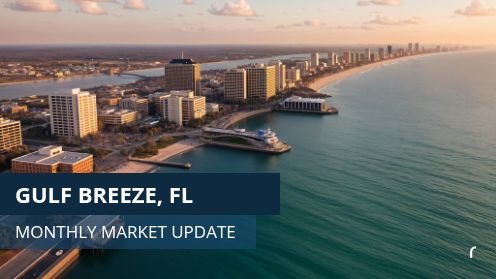
  • Gulf Breeze Market Update

    Gulf Breeze Market Update

    Here’s a quick update on the Gulf Breeze housing market. Homes are selling at a similar pace as before. There are enough listings to meet buyer interest, and sales activity remains consistent.

  • Common Moving Mistakes That Can Cost You Time And Money

    Common Moving Mistakes That Can Cost You Time And Money

    Moving can be stressful, but many common mistakes are preventable. Start packing early, focusing on seldom-used items and labeling boxes clearly. Declutter by sorting belongings into keep, donate, sell, recycle, and discard piles to reduce costs and unpacking time. Budget realistically, including extra expenses. Research moving companies thoroughly. Protect fragile items properly and set aside an essentials box for immediate needs. Prepare logistics for moving day to ensure a smoother process.

    Continue to full article

  • Keep your home safe and secure with these easy upgrades

    Keep your home safe and secure with these easy upgrades

    Enhancing home safety includes using emergency fire blankets, interconnected alarms, fire extinguishing sprays, portable escape ladders, smart plugs, water leak and freeze sensors, water meter keys, wet/dry vacuums, high-security deadbolts, secondary locks, door security bars, security cameras, floodlights, and fireproof document boxes to reduce risk and stress during emergencies.

    Continue to full article